





The Gillespie Centre - Supporting Community Hubs Through Flexible Funding
Located in Biggar's High Street and operating from a converted church building, the Gillespie Centre serves as a community hub in this rural Scottish town.
The Centre employs six part-time staff, coordinates over 50 volunteers, and operates a community café six days a week. With weekly footfall of 1,050 people across 19 regular groups, it provides a meeting space and social hub for the local community.
The Journey: From Revenue Support to Capital Investment
The Gillespie Centre's development is an example of how community hubs can require different types of support at different stages of their evolution. Building on phased investments can help to create stronger, more sustainable organisations. The Nadara Glenkerie Wind Farm Fund has provided consistent support for the Gillespie Centre at important points of the group’s journey, as described below.
Phase 1: Securing Operational Stability (2023)
Recognising that effective community hubs require professional management to coordinate operations, Gillespie Centre Trustees began to look for funding that would support a formal Management role. They applied to the Nadara Glenkerie Community Fund and were awarded £37,500 to contribute to revenue funding for manager costs over three years. This investment addressed several organisational needs:
- Leadership Continuity: The funding enabled the Centre to maintain a dedicated Manager position to oversee six part-time staff members and coordinate the activities of over 50 volunteers across multiple programmes and services.
- Capacity Building: Previously, essential tasks such as funding applications and strategic planning had fallen to volunteers who, despite their commitment, lacked the time and specialist knowledge that was needed. The Manager role allowed for proper skills development and knowledge transfer, ensuring these crucial functions were handled professionally.
- Organisational Development: With stable management in place, the Centre could maintain proper HR policies, implement supervision arrangements, and develop the administrative systems necessary for a community organisation serving over 1,000 people weekly.
This revenue support has proved essential in establishing the operational foundation that has acted as a catalyst for further project developments.
Phase 2: Addressing Physical Barriers (2025)
With stable management established, The Gillespie Centre was able to engage more effectively with its user groups and identify emerging challenges. As community groups grew in size and scope, the Centre's physical limitations became increasingly apparent, particularly the accessibility barriers that were preventing full community participation. The Centre undertook comprehensive consultation with users, revealing significant infrastructure challenges that were limiting the organisation's ability to serve its diverse community:
- Accessibility Barriers: Steep stairs to the Upper Hall excluded people with mobility impairments, elderly residents, and families with young children from accessing the Centre's largest and most versatile space.
- Inadequate Facilities: The absence of accessible toilet facilities and proper changing areas created additional barriers for disabled users and families, while inadequate plumbing affected the overall visitor experience.
- Capacity Constraints: Growing groups were forced to move to smaller, less suitable spaces on the ground floor, limiting their activities and potential for expansion.
At the time, Iona Goldie from Life Well Lived Biggar said:
Our group would benefit from some more movement/dance and the stimulation of bigger events and more interactive activities. The space and ambience in the upper hall would be perfect for this but sadly, many of our participants cannot manage stairs, several being reliant on wheelchairs and rollators.
Recognising that these barriers were at odds with the Centre's mission to serve all community members, and armed with the organisational capacity developed through the earlier revenue funding in 2023, the management team developed a comprehensive 'Access for All' project proposal.
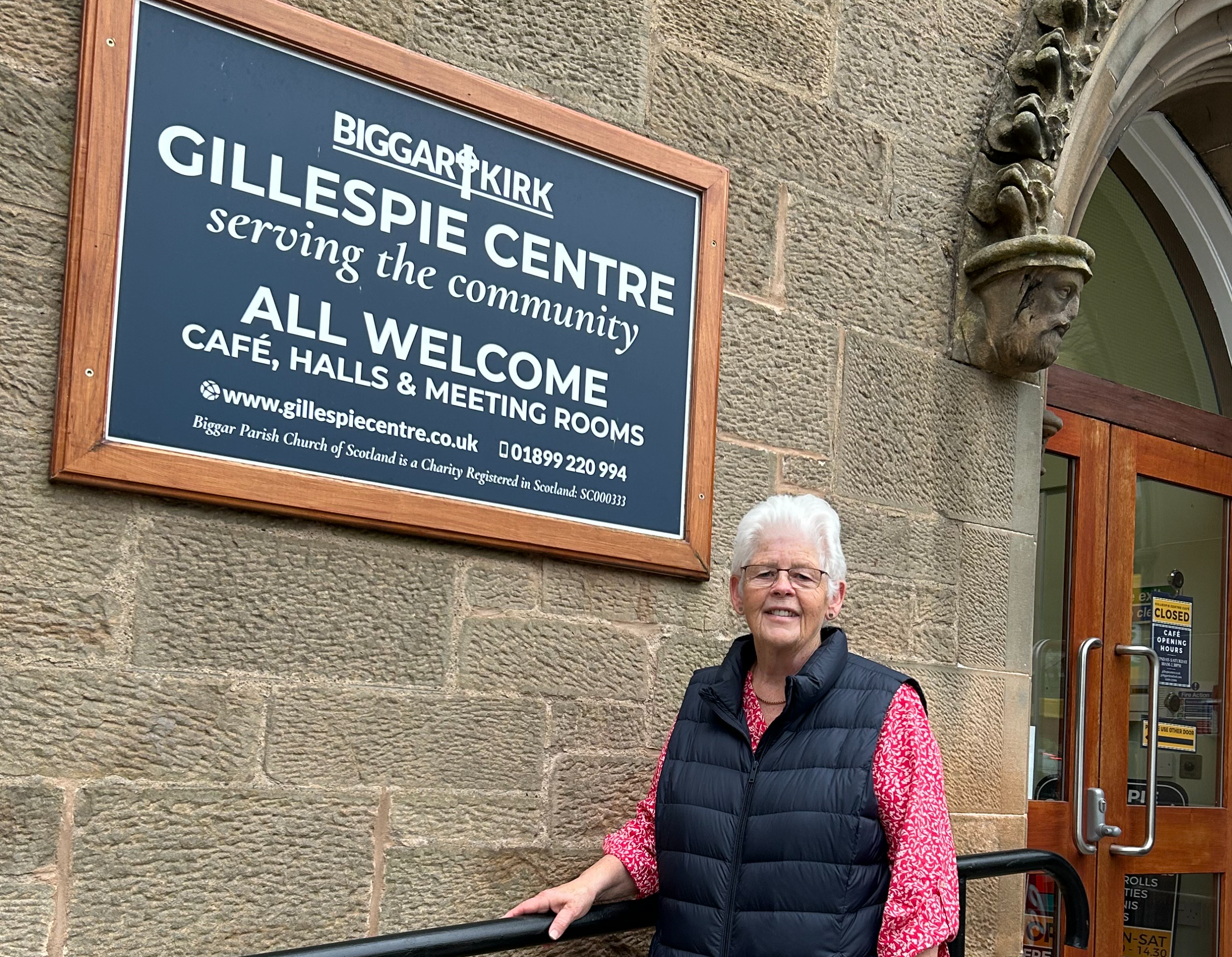 In April 2025, the local Nadara Glenkerie fund decision making panel awarded the Gillespie Centre £10,000 towards project costs of just over £265,000 for infrastructure improvements including lift installation, accessible toilet upgrades, and plumbing improvements.
This capital investment built directly on the earlier revenue support, demonstrating how sustainable funding approaches can address both the immediate operational needs of community organisations and their longer-term development requirements.
The project has been transformative for community users who were previously excluded from the Centre's full range of activities, enabling the organisation to fulfil its potential as an inclusive community hub serving all residents regardless of age, ability, or family circumstances.
Conclusion
The Gillespie Centre in Biggar is a living example of how flexible funding can effectively support community hubs across all development phases. By addressing both operational and infrastructure needs through revenue support, management assistance, and capital improvements, this approach recognises that thriving community spaces require skilled leadership, accessible infrastructure, and sustainable operations to help strengthen community hubs over time.
Read more about the Nadara Glenkerie Wind Farm Community Fund